


Books by Osho
Intro
There are more than 650 of them, more than 240 in English and the others in many different languages, so we won′t mention them all.Here is an extensive Osho Bibliography.
OSHO Live! offers:
- An AI/RAG search engine over Osho′s complete Hindi and English discourses; ask anything in plain language and get answers grounded directly in his original talks.
- A searchable directory of Osho ashrams and meditation centers worldwide.
Osho Archives A new search engine on the web for Osho′s words. It is a digital archive giving direct access to Osho′s discourses, darshans and letters. More info
Osho International Foundation has completed The Osho Library, a searchable database with "over 225 books of wisdom and humor at your fingertips" (more than 3000 English Osho Talks). User-Guide to the online library (pdf-file).
Downloadable Osho Books
- Osho′s books at Osho World
A Danish professor, Pierre Evald aka swami Anand Neeten, proficient in library organisation, travelled to Poona several times - in 1989, 1999 and 2001 - in order to study Osho′s library.
Here′s his report in pdf-format (28 pages).
More recently Neeten compiled an Osho Source Book, a bio-bibliography in three parts:
- Volume I (1931-1974) Gadarwara. Jabalpur. Bombay
- Volume II (1974-1990) Poona One. Oregon. World Tour. Poona Two
- Volume III (1931-1990) References. Bibliography. Sources
Neeten punctures the ′Osho-never-wrote-myth′ in this short contribution of his. Osho′s manuscripts are now at www.sannyas.wiki.
Osho painted in the inside covers of books uniquely beautiful artwork, which has been reproduced using the silkscreen method.
The Osho Times of May 1, 1991:
Ma Kavisho, Osho′s librarian, has catalogued 900 books in which Osho painted the endpapers and 3500 in which he coloured his signature. Osho′s paintings show an uninhibited playing with vivid colours of transparent ink. His ink pens often leaked through one or more pages of the books, creating an entirely new painting on the subsequent pages: a wonderful collision of colours with words. What a delight to discover in Osho not only the rebel, poet and intellect-par-excellence - but the contemporary artist as well!"And if a rose need not have a purpose, why should my paintings have a purpose? They are existential. There is no need for any purpose."
(Osho quoted from I Celebrate Myself)Osho talks about his library and books:
Notes:
- The well-known writer Jeffrey Archer visited Osho′s library in the Pune Resort in May 2008
- The copyrights of Osho′s books is claimed by Osho International Foundation (OIF) with offices in New-York.
- The Quest
- ▲Warning!
The Book Of Secrets
 The Books of Secrets, also called Vigyan Bhairav Tantra, is a Tantric text. Tantra means: tools for transformation. Tantra is composed of two roots: ′tan′
and ′tra′. ′Tan′ is related to the English word ′tangible′ and ′Tra′ is related to the
English word ′trowel′. You can see that embedded in the word Tantra is a
tangible tool. This is to say, that in the book there are meditation techniques
about transformation while in the multi-dimensional reality that includes the
physical arena. Tantra is very practical and with a Tantra practice, you develop
a personal toolkit to connect you with the flow of all of life and deepen your
relationship with life and with the Divine.
The Books of Secrets, also called Vigyan Bhairav Tantra, is a Tantric text. Tantra means: tools for transformation. Tantra is composed of two roots: ′tan′
and ′tra′. ′Tan′ is related to the English word ′tangible′ and ′Tra′ is related to the
English word ′trowel′. You can see that embedded in the word Tantra is a
tangible tool. This is to say, that in the book there are meditation techniques
about transformation while in the multi-dimensional reality that includes the
physical arena. Tantra is very practical and with a Tantra practice, you develop
a personal toolkit to connect you with the flow of all of life and deepen your
relationship with life and with the Divine.
- The Cause of Suffering
- Tantra as Enjoyment of Life
- Negative Vibrations
- Dynamic Meditation and Rock Music
- Religion is Basically Passive
The Book of Secrets is a series of talks with commentaries on the 112 meditation techniques given by Shiva to his consort Devi, alternated with question and answer sessions. There is a technique here, Osho says, for every type of man and woman in the world, from the past, present or future.
A Few Techniques:
- Astronauts and The Book of Secrets
- Self-Remembering
- Feel "I Am"
- The World is a Mirror
- Cosmic Orgasm Through Tantra
Yoga The Alpha and the Omega

Another famous series of 10 books is Osho′s Yoga The Alpha and the Omega, based on Patanjali′s sutras.
Osho says:
We live in a deep illusion - the illusion of hope, of future, of tomorrow. As man is, man cannot exist without self-deceptions. Nietzsche says somewhere that man cannot live with the true: he needs dreams, he needs illusions, he needs lies to exist. And Nietzsche is true. As man is he cannot exist with the truth. This has to be understood very deeply because without understanding it, there can be no entry into the inquiry which is called yoga. The mind has to be understood deeply - the mind, which needs lies, the mind which needs illusions, the mind which cannot exist with the real, the mind which needs dreams. You are not dreaming only in the night. Even while awake, you are dreaming continuously.
Patanjali and Osho are two awakened ones. According to one of the first sutras of Patanjali their words are a source of true knowledge.One of Patanjali′s Sutras reads:
Meaning:
- direct cognition
- inference
- the words of the awakened ones
| Vital Balance | Perfect Way | Gateless Gate |
|---|---|---|
 |
 |
 |
| Interview with Osho 1971 The necessity of balance between reason and heart PDF-file (400 kB) |
Ten discourses by Osho June 3 to 8, 1964 given near Mount Abu India PDF-file (617 kB) |
Timeless letters by Osho 1970 - 1971 PDF-file (475 kB) |
| LSD: Shortcut to False Samadhi | The Eternal Message |
|---|---|
 |
 |
| Interview with Osho 25 October 1970 PDF-file (498 kB) |
Timeless letters
by
Osho 1971 PDF-file (332 kB) |
Glimpses of a Golden Childhood

The book contains fragments of Osho′s childhood, a childhood of rebellion. It tells stories from his school, his family, his grandfather, his first meetings with extraordinary people. And it is filled with the love Osho has for all these figures and with the love these people feel towards him. At the end of the book you will find a rich collection of rare pictures of Osho in his private rooms.
Books I have Loved

In ′Books I have loved′ Osho gives a series of private talks and mentions his more than 100 favourite authors and books. The book documents a ′Zen koan′-like situation: while having his teeth treated, Osho talks. Devageet, the dentist, Amrito, his personal physician, take notes. Osho asks the three to afterwards write an account of what they have heard. One should do the writing and the others the editing.

Ecstasy - The Forgotten Language
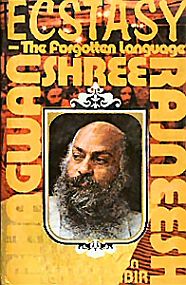
Osho speaks on the exuberant poems of Kabir as translated by India′s Nobel Prize-winning poet, Rabindranath Tagore. He also responds to questions as diverse as the difference between relationship and aloneness, mind and society, self and enlightenment, and explains the difference between a crystallized self and a strong ego.
Ancient Music in the Pines

If you are missing, you are missing only on your own account. There is no wall between you and the music; even if there is felt to be a wall it is only of your own thoughts. And even then the music goes on penetrating you. You may not listen to it but it goes on massaging your whole being, it goes on nourishing you, it goes on giving you life, it goes on rejuvenating you. Your heart throbs in the same rhythm as the heart of the whole.
The Divine Melody

In this series of ten discourses Osho discusses some of the most beautiful songs of Kabir. In one particularly fascinating discourse Osho speaks on the seven chakras, the seven stages through which each individual must pass, and a categorization according to which chakra we function from. Another discourse examines love as "the only miracle there is," and relationships. In addition, Osho answers questions on subjects as diverse as homosexuality, prayer, being oneself, the distinction between ego and individuality, trust, the male and female within each individual, and humanity′s addiction to misery.
Four steps to the Divine Melody
Philosophia Perennis

Osho describes Pythagoras as "a seeker of truth par excellence," who lived in Alexandria and was initiated into the mystery schools of Egypt. He then traveled to India, Tibet and China - at that time the whole known world - until he became self-realized. He found the "Perennial Philosophy" but was persecuted by his own society. The fragments of his teachings were collected after his death and written down by a disciple in The Golden Verses of Pythagoras. In his commentary, Osho expounds on the idea of the East and West as representatives of the brain′s two hemispheres, and on the two Pythagorean laws - of necessity and power.
The Dhammapada: The Way of the Buddha

Osho calls the incomparable Dhammapada sutras of Buddha, "The Book of Books." He explains that these sutras are concerned with every aspect of man′s unawareness, and that Buddha′s whole message is devoted to the raising of our consciousness.
To enter into the Dhammapada with Osho is to witness a deep friendship of enlightened masters. These sutras were compiled by Buddha′s disciples to contain the essence of all his
 teachings. This was the
last turning of the Wheel of Dharma, 2,500 years ago. Osho′s
commentaries on these sutras (in 12 volumes) set the Wheel of Dharma in motion
again. Osho also answers questions from disciples and other seekers
in alternate discourses all generously sprinkled with stories,
personal anecdotes and, of course, a multitude of jokes. Visually
this boxed set is stunning, without doubt a collector′s set, and
twelve volumes to dive into for years to come.
teachings. This was the
last turning of the Wheel of Dharma, 2,500 years ago. Osho′s
commentaries on these sutras (in 12 volumes) set the Wheel of Dharma in motion
again. Osho also answers questions from disciples and other seekers
in alternate discourses all generously sprinkled with stories,
personal anecdotes and, of course, a multitude of jokes. Visually
this boxed set is stunning, without doubt a collector′s set, and
twelve volumes to dive into for years to come.
The White Lotus

Bodhidharma, a disciple of Buddha, was the first patriarch of Zen. The notes collected by his disciples from Bodhidharma′s discourses, contain the essential core of Buddha′s message. Buddha and Bodhidharma are vastly different in their expression of truth. Osho sees Buddha as the silence of a breeze, Bodhidharma he likens to a storm. This discourse series alternates the eminently readable interchanges between Bodhidharma and his disciples, and Osho′s response to questions from his own disciples and other seekers. In the words of one journalist: "Just by reading these discourses there is a risk you may be pulverized by their inspiration."
Volume 1
|
Volume 2
|
Volume 3
|
Volume 4
|
|
Osho makes a clear distinction between Jesus the rebel
and Christianity that followed after him. Through the
gospels of Matthew, Luke and John he reintroduces Jesus as man,
mystic and uncompromising master filled with love, fire and
compassion. As Osho comments on the
sayings of Jesus, suddenly what Jesus was trying to impart becomes
luminously clear, startlingly relevant. In Osho′s understanding Jesus has been killed twice - once by the Jews and again by Christians who have smothered his insights with interpretations that have little to do with his teachings. Osho resurrects Jesus, seeing in his words a truth that the reader intuitively feels to be closer to Jesus′ heart than that of any priest. |
|
Beyond Psychology

Osho talks in depth on a variety of esoteric subjects. He describes many techniques of self-discovery, pointing out that psychological answers to man′s self-made miseries will no longer work. These discourses, are rare jewels of wisdom.

| TAO | TAO |
|---|---|
| The Pathless Path | The Three Treasures |

|

|
Krishna the Man and His Philosophy

Excerpt
Nine Sutras

Excerpt
The Greatest Challenge: The Golden Future

Excerpts
From Sex to Superconsciousness

With complete frankness Osho discusses the three stages of sex - physical, psychological and spiritual - and provides guidance on how this raw energy can be transformed into the realization of ultimate consciousness. He explains that when we repress our basic nature, sex takes roots in the unconscious, creating an unnatural obsession. It is this psychic state that has produced much mental sickness and the widespread perversity of society today. ‟Sex is man′s most vibrant energy,″ Osho says, ‟but it should not be an end unto itself: sex should lead man to his soul.″ It′s a translation of the 1968 Hindi book: ′Sambhog Se Samadhi Ki Aor′, and added to Osho′s notorious reputation in India.
The Book of Wisdom

The three masters that Atisha remained with for many years were:
- first, Dharmakirti, a great Buddhist mystic. He taught him no-mind, he taught him emptiness, he taught him how to be thoughtless, he taught him how to drop all content from the mind and be contentless.
- The second master was Dharmarakshita, another Buddhist mystic. He taught him love, compassion.
- And the third master was Yogin Maitreya, another Buddhist mystic. He taught him the art of taking the suffering of others and absorbing it into your own heart: love in action.
This could happen because all these three masters were great friends. They had started
their search together; while they were on the way they had remained together, and when
they attained they were still together.
Atisha became a disciple of Dharmakirti. Dharmakirti said to him, "I will teach you the
first principle. And for the second you go to Dharmarakshita, and for the third to Yogin
Maitreya. This way you will know all the three faces of the ultimate reality, the three faces of
God - the trinity, the Trimurti. And this way you will learn each face from the person who
is the most perfect in it."
These are the three ways people reach to the ultimate.
(Osho - The Book of Wisdom #1)Enlightenment: The Only Revolution

The original working title of the translation from Hindi was ′The Mahageeta′, but the book was published in 1997 under the title ′Enlightenment: The Only Revolution′ and contains discourses on the great mystic Ashtavakra.
Books by Disciples
Journey Of The Heart
An Autobiography
By Ma Yoga Laxmi

Laxmi was Osho′s secretary during the years before Osho moved to the United States. She opened the Shree Rajneesh Ashram in Poona on the 21st March 1974.
- Read Laxmi′s book (online or right-click and save link/target as)
- Picture of Laxmi sitting at Osho′s feet during darshan
- Life is Just a Play a movie on the life of Laxmi.
The Bird Has Flown
Ma Yoga Laxmi, Osho′s exuberant secretary who ran the Poona Ashram in the seventies, left her body on January 6, 1995
after a long battle with cancer.
Laxmi had been living in Bombay since leaving the commune in the mid-eighties. She told her friend Ma Jyoti
that she was tremendously grateful to Osho, particularly for his last message to her. She said, "I understood that it
was time for me to stop putting energy into outer things and to go in.
He knows better than the rest of us what we need. Now the bells have started ringing and the bird has flown his cage anytime
and Laxmi is ready for that." (note: Laxmi often referred to herself in the third person.)
Her last day began with listening to an Osho discourse. Shortly afterwards she simply slipped away, her hand on her heart,
whispering, "Osho is here..." She said that nobody should mourn her, but celebrate her death.
Bombay sannyasins celebrated her death with a beautiful kirtan on her birthday, February 12.
Much Ado About Nothing
By Mahendra Myshkin

Website.
Subhuti′s review.
Indigo Adults
By Kabir Jafe and Ritama Davidson

Diamond Days With Osho
The New Diamond Sutra
By Ma Prem Shunyo
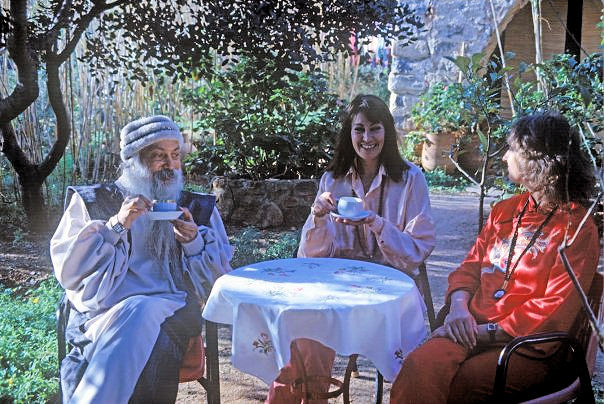
Being asked by Osho to write ′The New Diamond Sutra′ Shunyo decides to share her personal journey with the Master, starting in London in the early seventies until Osho leaves his body, and beyond. Shunyo has a very intimate view. Soon after arriving in Poona, she was asked to join the team of Osho′s personal caretakers and to do his laundry. A beautiful, subjective story, heart-warming, juicy, full of laughter and tears.
At present Shunyo doesn′t only work together with musician and friend Veet Marco, but also offers Life Trainings with her friend Anando Heffly.
Life of Osho
By Sam
Life of Osho reads like a thriller. Widely praised by teachers on the contemporary satsang circuit.Read the book online (pdf-format).
Excerpt
Sam was the pseudonym of Swami Prem Paritosh (Chris Gray), who died May 14th 2009. He was the main founder of the Sannyasnews website. A tribute by Parmartha.
One Hundred Tales for Ten Thousand Buddhas
By Ma Dharma Jyoti

Ma Dharma Jyoti is one of Osho′s earliest disciples. She is leading meditation camps in various places in India and at Oshodham in New Delhi.
- Interview with Ma Dharm Jyoti part 1
- Interview with Ma Dharm Jyoti part 2
- Interview with Ma Dharm Jyoti part 3
- Picture of Jyoti with Osho
Allah to Zen
By Ma Chetan Unmani and Swami Chaitanya Keerti
A book of first hand accounts of people who met Osho : Allah to Zen - An Insight into the World of Osho: The Real Man of the Millennium.My Dance with a Madman
By Swami Anand Subhuti

The author comments: "The tales in this book are snapshots of an unnecessary journey, undertaken by a man who did not need to go anywhere. He went in order to help people who did not want to be helped, to give them something they already had. He irritated them so badly that 99 percent of them wanted him silenced. But the remaining one percent loved him, bowed down to him and thanked him for coming. I am one of those. This is my story. This is my dance with a madman. I hope you enjoy it."
Tears of the Mystic Rose
By Swami Rajneesh
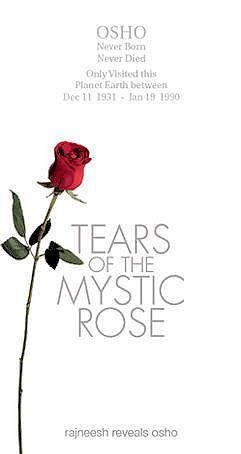
A mysterious love story between a master and a disciple
- Swami Rajneesh′s website
- Download the book and other books by Rajneesh here
- Osho Commune
Forever Is Not Long Enough
By Prem Patipada

A Seam For the Master
By Veena


It tells the story of how Veena came to design and sow the outfits for Osho′s photo sessions and how she found a clever solution for his ′pre-secured′ sleeping garment.
- Download the book (a pdf-file, right-click and ′save link/target as′)
Meditations From The World of Osho
By Amritshree (K.V.S. Pillai)
A compilation of Osho′s active and silent meditations; the ebook also contains all 112 meditations of the Vigyan Bhairav Tantra (aka Book of Secrets) and has a few interesting articles by professionals using the meditations, as well as one by Amrito MD on the importance of relaxation.Download the book (a pdf-file, right-click and ′save link as′)
Food is Home
By Sarjano

Italian Sarjano was in charge of the kitchen at the Osho Ashram in Pune for over twenty years. He has opened the International Academy of Italian Cooking Arts at his ristorante My Place in Vagator, Bardez, Goa. To everyone who wishes to learn the subtle art of Italian cooking, he is also available as a Food and Restaurant Consultant; he is a widely traveled Italian chef.
Excerpt: It′s love that is cooking
The G.U.R.U. Book
By Krishna Prem

G.U.R.U. means ′Gee yoU aRe yoU′
Krishna Prem writes:
"It′s no coincidence that G.U.R.U. has two U′s in it! One U represents the
little u. That′s the u that gets up in the morning, brushes its teeth, gets
dressed, goes out and struts its stuff! It′s your little local life, you can
call it your your self, your I or your me. Then there′s the other U, which
is your big U. That′s the U who exists beyond your body, your mind and the
entire world itself. It′s the ultimate U, call it God, Source, Existence,
call it what you like!
And that′s my job here in this book, to help your little u get in touch with
your big U, so you know who U are in total, and that there′s no separation
between the two!"
Tantric Pulsation
By Deva Aneesha


This book celebrates Aneesha′s thirty years of experience, working with neo-Reichian
methods of energy release, combined with meditation. It contains both
theoretical and descriptive information about her work with people, which she
calls Pulsation, and also traces the development of a new branch of her work,
Tantric Pulsation. Aneesha′s book, "Tantric Pulsation," is rooted in the insights
of two of the most controversial figures of the twentieth century,
Wilhelm Reich
and Osho.
Reich was a disciple of Sigmund Freud, the founder of modern
psychology. Reich agreed with Freud that sexual repression lies at the root of
psychological neurosis, and went on to state that even ordinary, normal human
beings are incapable enjoying their lives because of widespread sexual and
emotional repression practiced by all civilized societies. Reich found that the
physical body stores these repressed energies as tension in the muscles, which
he called "muscular armoring." He developed a system which uses breathing and
body movement to release this tension, including strong emotional expression.
This, in turn, allowes energy to flow freely and naturally throughout the whole
body, inducing a physical state of tremendous aliveness, together with feelings
of relaxation and well-being.
Osho, an Indian mystic considered by many
a modern Tantra master, also works with life energy through his extraordinary
and transforming "active meditations". His Tantra vision, wholly life affirmative,
is rooted in acceptance, let-go, meditation, and celebration of life. This is a
vision which embraces all human experience, from sex to superconsciousness.
Aneesha′s methods have grown from these two streams of understanding, one
western, one eastern. The result is a unique process of self experience and
transformation, both delightful and profound.
Listen Little Man
By Wilhelm Reich

This is Wilhelm Reich′s honest, disturbing, pungent book to kick each one of us, the average human being, the Little Man, a
conscience. It was written in the summer of 1946 for the Archives of the Orgone Institute. At the time there was no
intention of publishing it.
It tells how Reich watched, at first naively, then with amazement, and finally with horror, what the Little Man does to
himself; how he suffers, rebels, honours his enemies and murders his friends.
This appeal to the little man was a silent response to gossip and slander. When it was written, no one could foresee that a
government agency charged with the safeguard of public health (the FDA), in league with politicians and psychoanalytical
careerists, would unleash an attack on orgone research.
The decision to publish this appeal as a historical document was made in 1947, when the emotional plague conspired to kill
orgone research (not to prove it unsound but to kill it by defamation)...
He belongs to us. I give him posthumous sannyas.
(Osho - Sermons in Stones #7)Little man, you′ve built your house, your life, your culture, your civilisation, your science and technology,
your love and your methods of child-rearing, on sand.
You don′t know this, you don′t want to know it, and when a great man tells you, you kill him.
- Download Listen, Little Man (.pdf file, right-click and ′save link or target as′)
Tantra, a Way of Living and Loving
By Radha C. Luglio

Radha C. Luglio describes her personal journey of spiritual transformation in
which she discovers the basic principles of Tantra′s devotion, receptivity,
naturalness, meditation and sensuality through a variety of intense experiences.
Each chapter is a transmission of Tantric understanding to the reader. Each
begins with a quote from a different enlightened mystic and ends with a Tantric
meditation technique.
While telling her story, Radha draws on a variety of sources, such as Vigyan
Bhairav Tantra, one of the oldest Hindu scriptures, and the sayings of ancient
Buddhist Tantra masters such as Tilopa, Naropa and Saraha.
She describes her initiation as a disciple to an Indian mystic, Osho, whom
she regards as a modern Tantra master, and the personal guidance she receives
from him. She applies this guidance to her life as a seeker, which includes
periods of celibacy, discipline and hard work contrasted with times of intense
sexual exploration and freedom.
Interview with Radha (in Italian and on You Tube):
Love Song for Osho
By Ma Anand Devika

A review of Devika′s book
And a
second review
Past the Point of no Return
By Ma Anand Bhagawati

The book contains stories of several people who recount openly the circumstances which ultimately led them to become disciples of Osho. You will intimately come to know each individual as they share their inner and outer journeys that have catapulted them past the point of no return.
Published by Osho World.

Blessed and Not Knowing
By Swami Deva Rashid aka Rashid Maxwell


Blessed:
 The poems and
drawings in this collection have been selected from more than 25 years of work. They arise from the common round of daily life:
gardening, watching the outer sky with a painter′s eye and the inner with a meditator′s awareness. There is a fine wit to many
of the poems, giving them a snap, a surprise, a riddle, just like the ending of a haiku. This book expresses one person′s love for a
world at once funny, crazy and wonderfully mysterious.
The poems and
drawings in this collection have been selected from more than 25 years of work. They arise from the common round of daily life:
gardening, watching the outer sky with a painter′s eye and the inner with a meditator′s awareness. There is a fine wit to many
of the poems, giving them a snap, a surprise, a riddle, just like the ending of a haiku. This book expresses one person′s love for a
world at once funny, crazy and wonderfully mysterious.
Not Knowing:
A second collection of poems and drawings with simple everyday observations and expressions, describe the author′s insights on the quest for spiritual truth: the pain and the joy, the mundane and the elevated. He sees through the web of samsara and at the same time gracefully accepts the bee sting in the field...Osho, the Luminous Rebel
By Vasant Joshi PhD

The book traces the story of Osho from his birth, talking about his spiritual search for truth and the story of his
enlightenment.
It also takes the reader through those years of Osho′s struggle with authority figures, his travels all over India, and
to the much-hyped city of Rajneeshpuram in the US.
Osho believes that he was poisoned by the US government when he was detained in various jails there; he was later denied visas in almost all
countries across the world - events, he reveals, that exposed the true face of "Democracy."
Moments of Lucidity
by Swami Prem Nirvan aka Arthur D. Saftlas

Osho, India and Me
By Krishna Prem (Jack Allanach)

"The first time I see him he is reading Zorba the Greek. He sits in an orange armchair in the far corner of the room, legs
crossed, the novel resting lightly on one knee. Apart from the single chair, a shelf of books, and a wide bed that lies close to
the floor like a futon, the room is empty...
It is early November 1973. Osho lives in a single room in a three-bedroom flat in Woodlands, a luxury-apartment complex in the
affluent Malabar Hill section of Bombay."
So starts ′Osho, India and Me′.
Thirty years ago Osho asked Krishna Prem to write ′a little book′. He wrote what was to become a unique account of a master-disciple relationship and life around an Enlightened Master.From early days in Bombay, Dynamic Meditation on Chowpatty Beach at 5 am, a journey to the middle of India for a quasi survivor experiment; a full moon acid party in Goa; meetings with Indira Gandhi and Morarji Desai to meditations on the secret of sex and darshans with the Master - the ′little book′ evolved.
To order the book go to: www.lulu.com
Take It Really Seriously
The Giant Book of Laughter
 "A sense of humour you can have
about yourself - it is great to laugh about yourself, and those who can do it
are slowly filled with love and care for others. In
the whole world there′s nothing more inviting than laughing about
yourself." Osho
"A sense of humour you can have
about yourself - it is great to laugh about yourself, and those who can do it
are slowly filled with love and care for others. In
the whole world there′s nothing more inviting than laughing about
yourself." Osho
Swami Vimal, who worked in the ′Osho-Joke-Search & Create′ department for a long time, has filled almost 700 pages with incredible jokes. No other Master has used the innocence of laughter to shock you out of your ′mind′. When you laugh, no-mind comes about effortlessly.
Bhagwan: One Man Against the Whole Ugly Past of Humanity
By Juliet Forman aka Maneesha James

 A detailed protocol of Bhagwan′s world odyssey
told by someone who accompanied him.
Beginning with Bhagwan′s
enforced departure from the US, the story takes the reader to a dozen countries, as his people
attempt to find a new home for their Master.
A detailed protocol of Bhagwan′s world odyssey
told by someone who accompanied him.
Beginning with Bhagwan′s
enforced departure from the US, the story takes the reader to a dozen countries, as his people
attempt to find a new home for their Master.It is a document of great love, the love of Osho for this world, for this life, encouraging each one of us to find our own Self. And it is likewise the story of the great love of a disciple for her Master.
Meditation: The First and Last Freedom
The Essential Osho Meditation Handbook

A practical step-by-step guide to
many different meditation techniques, and the scientific explanation of
what meditation is and what not. A description of the obstacles and
pitfalls along the way, where one finds answers to meditators common
questions.
Meditations on light,
meditations on darkness, dancing, breathing, opening the heart, looking
within, listening... anything can be a meditation. From Born Again, Golden Light meditation to ZaZen, more than 70 meditation methods
are described.
A Surprise Life
By Ma Prem Sambodhi aka Susan M. Clare

The author writes:
This memoir recounts my experiences during the 10+ years I was a disciple of Bhagwan Shree Rajneesh (now known as Osho). The first half focuses on my participation at his ashram in India as well as the background and early influences that led to my becoming a disciple. The second half describes my involvement at our communal ranch in Central Oregon. My initial purpose in writing had nothing to do with publishing. I wanted to explore its potential for examining what destroyed our community from a viewpoint outside myself, on paper. I needed to understand what led to our collapse, and what part (if any) I may have played. As I progressed, however, I realized that others might welcome seeing how this destructive path came about, and perhaps notice a resemblance, as I did, between the behaviors that led to our downfall and similar behaviors in the larger world that might be recognized if we chose to pay closer attention.
From Fear to Enlightenment
By Mahadevi, formerly known as Divya Kshama

Mahadevi emphasizes that enlightenment is a scientific fact and not mere "philosophy,". Her approach to life is straightforward and uncompromising. This book is a compilation of psychological insights and personal guidance given by Mahadevi. Her sharp vision explores in depth a wide range of psychological and spiritual subjects, and sheds light on many of the personal and social problems in our society today.
- Mahadevi′s call to sannyasins to unite (pdf-file)
- Mahadevi′s update to her Final Call (after many responses - pdf-file)
- Reply of Veet Asmi, an "oldie" sannyasini to Mahadevi′s call.
Says Osho in Come, Come, Yet Again Come #14:
And it has now to be a known and recognized fact that my buddhafield is not going to be confined to the small place where I will be living with a few thousand sannyasins. All the small communes, ashrams, centers, all over the world will become little buddhafields. We have to fill the whole earth with buddhafields! We have to create a chain of buddhafields.
Y e s
By Anando aka Anando Heffly
 There are many books with
good advice: ′Just say YES to whatever life brings, just accept yourself and others as they are, and you will have no problems′.
It makes sense and sounds easy, but anyone who has tried it knows just how difficult it is to do in practice.
There are many books with
good advice: ′Just say YES to whatever life brings, just accept yourself and others as they are, and you will have no problems′.
It makes sense and sounds easy, but anyone who has tried it knows just how difficult it is to do in practice.
And often the only YES we know is a compromise - we deny our own needs and juice for life in order to please others - and that leaves us
feeling miserable and unsatisfied.
This book explains the hidden dynamics in your unconscious which get in the way of change. Understanding that gives you choices, for the
first time.
The book gives real, practical techniques for everyday situations where problems arise: relationships, family, work, changing circumstances
and yourself - your emotions, habits and personality patterns and your attitude towards your body.
In essence, it is about changing yourself from the inside, and then seeing the remarkable results that has on your life on the outside.
It has been designed by Sambodhi Prem of Global Suitcase Design Studio.
Interview of Osho Times International with Anando
The Sound of Running Water

Dhanyam writes:
Many friends of Osho′s will remember The Sound of Running Water, the beautiful, big photo biography that was produced in Poona One
times. Many gorgeous photos of Osho, his people, and his ashram, plus numerous quotes tell the story of Osho′s life and work between
1974 and 1978.
The book was printed in a limited edition and went out of print more than 20 years ago when Avirbhava bought the last (signed) copy for
$14,000 in Poona Two. Over the years, many sannyasins would sadly remember the time when they snapped up a copy for $100 in Rajneeshpuram -
and gave it away. Sometimes a copy would appear on ebay or Amazon, offered for several thousand dollars.
Now Swami Jagdish in Pune has reprinted the book, with the same photos and text, in almost the exact same format, and we have just received
a small shipment. Read more...
Osho - Call of the Ocean
By Zorba Designs in Pune

A beautiful book with many photographs of Osho and relating to his life, to celebrate Osho′s 80th birth year. The text is a compilation of excerpts taken from various
talks given by Osho, illustrating events and incidents that occurred around him.
Available at Osho World, Osho Viha
Be part of a master and your journey, your real journey, has started. Now you are on your way towards the ultimate ocean, the ocean of joy, of peace, of silence, of truth. What other religions call God, Buddha calls nirvana: the ocean of enlightenment.
(Osho - The Dhammapadda: Way of the Buddha Vol.5 #9)In Search of the Miraculous
By Eliza Mada Dalian (Ma Jivan Mada)

The book has won multiple book awards: Living Now Book of the Year, Nautilus, Eric Hoffer, and finalist in Indie Excellence Awards.
Eliza Mada Dalian Healer, spiritual reacher, author and founder of a new healing method. She uses, amongst other methods Osho′s active meditations.- Eliza Mada Dalian in the Bridging Heaven & Earth Show #25o
- Read how Jivan Mada re-discovered the Miraculous...
Hellbent for Enlightenment
By Ma Anand Nirgun aka Rosemary Hamilton

An intriguing journey into Nirgun′s experiences in Poona and Rajneeshpuram. This text is the author′s account of her life as a disciple of the notorious Indian
spiritual Master Bhagwan Shree Rajneesh also known as Osho. It traces her spiritual odyssey, as she abandons in 1974 her successful career of co-director of the United
Communities Service in Vancouver, Canada, to embark for Poona in search of enlightenment.
Nirgun concludes her book at age 74, writing, "Scientists tell us that nothing in existence can ever go out of existence. Spiritual folk call it ′life eternal′.
For me it′s an inner certainty. Death can take the fading body, the static personality, the prickly ego - take them, and welcome. But it can′t touch the infinite
intelligence that throbs in every atom of our being."
The 9 Dimensions of the Soul
By David Hey

For several years, David was the leader of the Codependency groups at Osho Commune in Pune, India. His book covers the ′enneagram of personality′, principally used as a typology of nine interconnected personality types.
On the Enneagram of Personality...
Confused, almost unrecognizable dilutions of Gurdjieff′s teaching have been concocted by various "self-help" groups, purveyors of seminars, certain modern heavily franchised "religions," and even cults. Oddball interpretations of his nine-pointed enneagram find their way into books on "personality analysis."
(Shirley, John in "Gurdjieff" - Kindle Edition)Money, Spirituality, Consciousness
By Mayuri Onerheim

Osho Heart to Heart Tarot
By Zorba Designs in Pune

The deck has 79 cards, each with a full-color Osho photo. There are cards like "Growth," "Emptiness," "Indivuality," "Aloneness,"...
The deck comes with an instruction booklet, which offers Osho quotes for each card and instructions on how to use the deck.
Seven Songs of Ecstasy
By Ma Prem Geet

"Seven Songs of Ecstasy to Enlightened Master Osho" by Ma Prem Geet is a collection of spontaneous poems that reveal a mystically rich devotion to love, life, and the Beloved.
This book is free to download
This is Reiki
By Frank Arjava Petter

The book immerses the reader into the mysteries of Japan, deepens the understanding of Reiki, not only historically, and invites to experiment with new Reiki techniques. It is for every Reiki practitioner and lover of Japan.
Don′t Kill Him
By Ma Anand Sheela

An apology written by notorious Ma Anand Sheela (Osho′s personal secretary between 1981 and 1985), on their life together from Poona to Rajneeshpuram, Oregon,
and beyond.
In Oregon she ruled the entire commune supposedly under Osho′s guidance, until differences crept up. Ma Sheela resigned from her position, left the commune, and fled
to Europe with fellow members. Osho accused her of planning a bio-terror attack, conspiring to murder important public officials, and running away with fifty-five million
dollars.
Osho, The First Buddha in the Dental Chair
By Swami Devageet

Meeting Osho in April 1976 Devageet immediately knew that he had found his spiritual master. He was given a new name, and a new life.
For over 12 years, until Osho left his physical body, in January 1990, Devageet was privileged to be Osho′s personal dental surgeon, during which time the master in
the dental chair operated on his dentist. He also asked Devageet to write this book:
"You, Devageet, will be my note-taker. I will speak from the dental chair. No Buddha has ever done such a thing... but you know me; I am a little crazy. One day these
notes that you take from your dental chair will become a beautiful book. It will not be like my other books..."
Mindfulness The Master Key
By Swami Chaitanya Keerti

"Buddha uses this word ′right mindfulness′ millions of times. When the mind disappears and thoughts disappear you become mindful. You do things-you move, you work, you eat, you sleep, but you are always mindful. The mind is not there, but mindfulness is there. What is mindfulness? It is awareness. It is perfect awareness" (Osho in And the Flowers Showered).
Encounters with an Inexplicable Man
Stories of Osho as Told by his People compiled and edited by Savita Brandt

These simple tales of the jolts and joys along the way to transformation give us an intimate glimpse into the relationship between this rare contemporary mystic and some of his thousands of ′sannyasins′, who came from all walks of life and several continents to live and work around him.
Divine Sexuality
By Ananda Sarita

Divine Sexuality offers transformative insights and methods for all ages, teaching the erotic aspects of Tantra. It provides potent answers to universal questions, regarding sexual anatomy, self-pleasuring, foreplay, creative positions, male female relationship, orgasm and the meeting of sex and spirit.
Tantric Love
By Ananda Sarita

An ancient way of finding our true selves and enriching our relationships. Tantic Love follows Tantra in its purest sense, presenting a practical, step-by-step guide that will not only help you discover a deeper understanding of yourself but will also show you how you can achieve a loving, long-lasting relationship with your partner.

|
OSHO ZEN TAROTThe Osho Zen Tarot is based on the wisdom of Zen that events in the world around us are mirroring our own thoughts and emotions. |
- The Tao Oracle by Deva Padma: a review
- Website of Padma and Ashika
- The Osho Transformation Tarot, also called Osho Neo-Tarot, as an application for your iPhone or iPad.
- Interview with Sona the Tarot Reader
- Osho on prediction, time and life
Books by Researchers
Osho Rajneesh
By Judith M. Fox
Judith M. Fox holds a doctorate in the sociology of religion from the London School of Economics, University of London. For more than twenty years, she has researched new religions, culminating in such books as The Way of the heart: A Study of Rajneeshism and Sahaja Yoga. She lives in Massachussetts.
A review by Swami
Rammurthi.
An Excerpt.
Compilations
Osho was not in favour of compilations, parts taken from his different books and put together to form another book. His main focus was on complete unabridged books. There are two exceptions, and it seems Osho had them published because:- He could give precise directions as to how they should be made
- It was an opportunity to have at least excerpts of his darshan diaries reach a wider audience
Discussion between Sarito and Keerti
(Two sannyasins who were in charge of Osho′s books)
Sarito wrote to Keerti:
"Osho himself at different times has asked for compilations to be made from his talks, including from the darshan diaries, from World Tour discourses, press interviews, etc. In "Poona Two," with Osho′s full support and guidance, a number of compilations were created by sannyasins on specific topics. After they were published, it was felt that these compilations were interfering with sales of the complete discourse books in the Commune′s bookshop. Osho′s suggestion then was that these types of books should be offered to outside publishers, as a ′bridge′ to new people."Keerti answered:
"Beloved Sarito, you say that Osho himself at different times has asked for compilation to be made from his talks. I know that he did allow that for some time, after some of us suggested to him about the compilations, and then we got the messages: ′Enough of the compilations. Do the complete books now. These compilations can be given to outside publishers.′The truth is that there were any number of compilations published in the eighties. This applied even more to the foreign-language translations published in the 70s and 80s. Many of those were compilations."
So:
Osho made statements on several occasions, that his discourses are "complete in themselves", that selections are likely to create a wrong impression, and that things said in a complete context may be misleading in isolation.The messages to and fro between Sarito and Keerti show that Osho was not in favour of compilations published by sannyasins themselves.
Compilations issued by mainstream publishers subjected a general public to what Gurdjieff calls "B-influences". People who managed to absorb these influences are then ready for "C-influences", the real stuff.
Notes:
- Osho copyrights paradoxes With Dhanyam′s comments.
- Gurdjieff talks about an esoteric center, that is connected with a conscious inner circle of humanity, and three kinds of influences:
- A-influences created in life, that is, in life itself - they are the first kind, and often the only kind, of influences people are subjected to; A-influences do not come from an esoteric center. The issues published in newspapers, for example, mainly consist of A-influences.
- B-influences created outside life as C-influences, but diminished in consciousness by being thrown into the general vortex of life; the second kind of influences. Myths and fairy tales can be said to be B-influences pointing to a higher level of consciousness.
- C-influences of a man on another man; the former man actually is connected with an esoteric center, directly or by succession; this is the third kind of influences. This influence is conscious, and under its action on the latter man′s ′magnetic center′, he becomes free from the ′law of accident′ and lives in agreement with the ′law of fate′. Osho′s video lectures and unabridged books can be said to be C-influences.
- In order not to have to work with mainstream publishers who prefer a watered-down Osho in compilations, some sannyasins publish Osho′s books themselves. There′s the example of Rebel Publishing house; and the story of Ghata and Sant who founded their own company in France (which though very successful, doesn′t exist anymore.) Ghata and Sant did so, because they found mainstream publishers to be too slow and too choosy, and Osho wanted all of his books published not only those who are a commercial success.
- Osho Viha Osho Books, DVDs and MP3. Viha offers materials on Osho dynamic meditation, Osho Rajneesh books, Osho DVDs, Osho meditation CDs, videos and Tantra books.